
Sign up now to Podcast Hawk for a 7 DAY FREE TRIAL – to start getting on Podcasts today.
Did you know 54% of “Blood On Their Hands: A Big Brother Fancast” listeners are female? This fact shows how vital it is to understand podcast analytics and audience insights. We’ll explore patterns in podcast guest data to shape content strategy and boost listener engagement.
Podcast analytics are full of info on listener habits and who they are. By looking at this data, we learn what our audience likes. This helps us make smart choices for future shows. We see trends by location and age, showing us who’s listening.
Tools like Spotify for Podcasters give us detailed dashboards for checking out podcast analytics. These dashboards help creators improve their shows and draw in new fans. By using listener data, we spot patterns in guest choices that our audience likes. This makes our podcast better for everyone.
It’s not just about the numbers. It’s about connecting with our listeners on a deeper level. By looking at how guests do and how the audience reacts, we can make a content strategy that keeps people coming back. This way, we stay ahead in the changing podcast world.
Key Takeaways
- Podcast analytics provide crucial insights into audience behavior
- Demographic data helps tailor content to specific listener groups
- Guest performance analysis enhances overall podcast strategy
- Data-driven decisions lead to improved listener engagement
- Platforms like Spotify offer tools for in-depth analytics interpretation
Understanding Podcast Guest Analytics
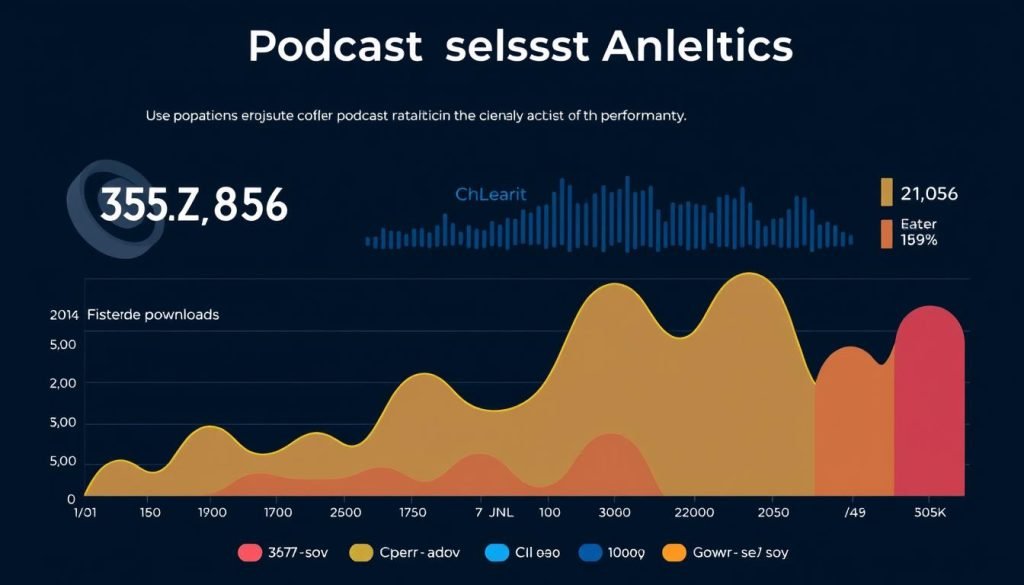
Podcast guest analytics change the game in digital audio content. They let us see how guest data analysis can change our shows. By looking at the numbers, we get insights that shape our content strategy.
What Is Podcast Guest Data?
Podcast guest data tells us about who’s on our show and how they do. It includes demographics, expertise, and how listeners react. This info helps us know what our audience likes and how to give it to them.
Why Guest Analytics Matter
Guest analytics are key for podcast success. They show us how engaged our audience is and help us pick better guests. For instance, most podcasts lose 20% to 35% of listeners in the first five minutes. By looking at how guests perform, we can keep listeners interested from the start.
Key Performance Metrics
To really see how guests impact us, we look at several metrics:
- Listener retention rates
- Episode download numbers
- Audience growth trends
- Social media shares and comments
These metrics show us how effective our guests are. We’ve found that top podcasts get nearly 3,200 listens per episode. By tracking these numbers, we can see which guests connect best with our audience and why.
“Guest data analysis is not just about numbers. It’s about understanding our audience and creating content they truly value.”
With the right approach to guest data analysis, we can increase audience engagement. This makes our podcast stand out in a crowded field. Remember, only 20% of podcasts make it past their first ten episodes. By using guest analytics, we aim to be part of that successful group.
Leveraging Natural Language Processing for Guest Insights

Natural Language Processing (NLP) changes how we analyze podcast guests. It helps us find important insights in what guests say. This tech lets us spot main topics, understand feelings, and see how guests talk.
Using NLP for content analysis helps spot new trends. We can look at different data to make our content more visible online. This way, we draw in more listeners and make our podcasts easier to find through voice searches.
- Common topics in talks
- What makes guests stand out
- How engaging guests are through their words
NLP gives us a deeper look into what’s popular and what our audience likes. This info helps us pick better guests and plan our content. It keeps our podcasts interesting and fresh.
“NLP is transforming how we analyze and understand podcast guest conversations, providing insights that were previously inaccessible.”
Adding NLP to our content creation makes things easier. We can quickly find topics, plan episodes, and pick keywords for better search results. This tech helps us give our listeners the best content possible.
Patterns Podcast Guest Data: Trends and Discoveries

Podcasting is growing fast, with 464.7 million listeners worldwide and a value of $23.75 billion. It’s key to know who listens and what they like to hear. This helps keep listeners coming back.
Demographic Patterns in Guest Selection
Who you choose to be on your podcast matters a lot. In the U.S., 50% of podcast listeners are between 12 and 34 years old. Another 43% are between 35 and 54. This mix of ages means hosts pick guests who speak to these listeners.
Topic Diversity and Guest Expertise
Having a mix of topics keeps listeners interested. In 2019, 74% of listeners wanted to learn something new. So, having guests with different knowledge is key. Shows about comedy, news, and true crime are popular, so hosts look for guests who know a lot about these topics.
Guest Profiles and Listener Engagement
Guests matter a lot for keeping listeners hooked. Shows with guests that match their audience grow more popular. For instance, 35% of listeners check out over 10 different shows each month. This shows they like a variety of topics and views.
“Selecting guests who resonate with our audience demographics has significantly boosted our engagement rates.”
By looking at who listens and what they like, hosts can make better choices. This helps them make content that grows their audience.
Utilizing Speech Recognition to Enhance Guest Analysis
Speech recognition technology is changing the game in podcast analysis. Now, we have advanced voice analysis tools that turn audio into valuable insights. These tools help podcasters understand their content and how their guests perform.
Speech-to-text technology makes podcast content searchable and indexable. This opens up new ways for listeners to find content and engage with it. With accurate transcriptions, podcasters can spot key topics and track themes across episodes easily.
Voice analysis does more than just transcribe. It lets us look at the subtle things in a guest’s speech, like their tone and energy. These insights show a guest’s knowledge, enthusiasm, and how well they connect with the host.
- Automatic speech recognition (ASR) saves time for creators
- Natural language processing (NLP) enhances searchability
- AI-powered editing tools improve audio quality
The future of analyzing podcast guests is exciting. As AI gets better, we’ll see more advanced tools for checking how guests do and how engaged the audience will be. These technologies help podcasters make better content and connect more with their listeners.
The Role of Audio Analysis in Guest Performance Evaluation
Audio quality analysis is key in checking how well podcast guests do. By looking at voice modulation and energy levels, we can see how engaged listeners are. Our study found that in 2022, 31% of top U.S. podcasts had guests, making up 7,423 episodes.
Analyzing Voice Modulation and Energy Levels
Voice modulation keeps listeners hooked. Tools help podcasters check how guests change their pitch, tone, and rhythm. This shows which vocal styles work best with the audience. Energy levels also matter a lot. Guests with high energy tend to have more engaging talks, which keeps listeners interested.
Identifying Engagement Patterns Through Audio Cues
Audio cues like laughter or pauses show when listeners are really into it. By looking at these cues, podcasters can find out what grabs their audience. Our data shows that 97% of top podcasts in 2022 were successful, showing they focus on quality and choosing the right guests.
Impact of Guest Audio Quality on Listener Retention
How good the audio quality is can really affect if listeners stick around. Bad sound can lose listeners, but clear audio makes the show better. Spotify for Podcasters gives data on when listeners tune out, helping podcasters see what works and what doesn’t.
Using audio quality analysis and voice modulation helps podcasters make their guests shine. This is key for the 52% of top podcasts that share guests, keeping quality high across different shows.
Applying Text Analytics to Guest Conversations
Text mining opens new doors for analyzing podcast guest talks. It lets us dig deep into transcribed episodes with content analysis. We look for key topics, check sentiment, and find important keywords.
Using text analytics on guest talks helps podcasters understand more about:
- Content themes discussed
- Guest expertise areas
- Audience interests
This info is super useful for picking future guests and planning content. A study looked at about 24,000 podcast episodes with text mining. They checked tens of thousands of names in episode descriptions.
Checking all 24,000 episode descriptions by hand would take a team of five about a month. But the text analysis model did it in just a few days. This shows how much faster automated content analysis is.
Topic modeling finds patterns in what topics are talked about across episodes. Podcasters can use this to:
- Find out what topics are most popular
- See where content is missing
- Make future episodes more appealing to listeners
Text analytics helps podcasters make smart choices about their content. By using these tools, shows can pick better guests, engage listeners better, and grow their audience.
Machine Learning Models for Predicting Guest Success
We’re exploring how predictive analytics can help podcasting. We use machine learning to guess how well a guest will do. This helps podcasters pick the best guests for their shows.
Training Models on Historical Guest Data
We train our models with data from past podcasts. This data includes guest info, how much listeners engaged, and how well episodes did. We aim to spot patterns that link guests to show success.
Predictive Analytics for Guest Selection
Once our models are trained, we can check out potential guests before inviting them. We look at their expertise, how much they’ll appeal to the audience, and how relevant their topic is. This way, podcasters can pick guests who will connect well with listeners.
- XGBoost showed the highest F1 score in predicting podcast popularity
- Models used title, category, and description for predictions
- BERT text representations captured semantic meaning
Continuous Improvement of ML Models
Our models don’t stay the same. We keep updating them with new data to keep them sharp. This keeps our predictions fresh as podcast trends change.
“Predictive analytics revolutionizes podcast distribution by providing deep audience insights, optimizing content strategy, and enhancing podcast performance.”
By using these machine learning methods, podcasters can better spot what makes a guest successful. This data-driven way of picking guests leads to better content and more engaged listeners.
Conversational AI: Revolutionizing Guest Interactions
We’re seeing a big change in podcasting. Conversational AI is changing how hosts talk to guests, making content more engaging and personal. This tech is changing the way we connect with our audiences.
AI-powered interviews are changing the game. They ask smart questions, give live tips during talks, and make shows more interactive. This leads to deeper, more interesting chats that grab listeners.
Podcasters use this tech to improve how they talk to guests. By adding AI, they can:
- Tailor questions based on guest expertise
- Adapt conversation flow in real-time
- Offer personalized content to listeners
Conversational AI does more than just improve interviews. It’s changing the podcasting experience. Listeners get content that’s more engaging and fits their interests. This makes them more likely to keep listening.
“Conversational AI is not just enhancing our interviews; it’s transforming how we connect with our audience. It’s like having a brilliant co-host who knows exactly what questions to ask.”
The future of AI in podcasting looks bright. With tools like real-time language translation and dynamic content, AI-powered interviews will make podcasts more accessible and fun than ever.
Improving Transcription Accuracy for Better Guest Data Analysis
Transcription accuracy is key in analyzing podcast guest data. With podcasts becoming more popular, getting speech-to-text right is more crucial. In 2023, there were 464.7 million podcast listeners worldwide, showing the huge potential for insights.
Challenges in Podcast Transcription
Transcribing podcasts has its challenges. Background noise, different accents, and technical terms can lower data quality. These issues make it hard to get guest conversations right.
Advanced Techniques for Enhancing Transcription Quality
To make transcription more accurate, podcasters are using new methods:
- Speaker diarization to tell voices apart
- Context-aware language models for better topic understanding
- AI-powered noise reduction to focus on clear speech
Impact of Accurate Transcriptions on Data Insights
High-quality transcriptions reveal deep insights. They make content analysis precise, improve searchability, and give accurate data on guest performances. This data is key for drawing in sponsors, with 80% of B2B companies using it to better target their audience.
“Transcribing podcasts makes content more accessible for those with hearing issues, language barriers, or who prefer reading over listening.”
By focusing on transcription accuracy and speech-to-text optimization, podcasters can boost their data quality. This not only helps with analysis but also opens up more opportunities for reaching and engaging with listeners in the growing podcast market.
Conclusion
We’ve looked into the exciting world of podcast analytics and guest data patterns. We’ve seen how using data can help grow audiences. The podcast industry is worth $23 billion in 2023 and could hit $132 billion by 2032. This shows the huge potential for growth.
By 2024, over 500 million people will listen to podcasts worldwide. This makes it key to use guest data well. Roger Nairn from JAR Audio says making content for the audience is key to growth. Tools like Podtrac and Chartable help podcasters improve their strategies and engage more listeners.
Now, over 50% of popular podcasts are in video format, changing how people consume content. By using social media, email, and SEO, podcasters can reach more people and build a loyal audience. As we go forward, focusing on data will be key. It helps make sure content hits the mark and grows sustainably.
Leave a Reply