
Sign up now to Podcast Hawk for a 7 DAY FREE TRIAL – to start getting on Podcasts today.
In the world of podcasting, a great interview can make your show stand out. But what makes a conversation truly captivating? Let’s explore the secrets of crafting compelling podcast interviews that leave listeners wanting more.
Imagine turning your podcast into a source of engaging content. It can inform and inspire your audience. With the right approach, you can make your interviews unforgettable, building a loyal following and establishing your authority in your niche.
Whether you’re experienced or new to podcasting, mastering interviews is key. From picking the right guests to asking the right questions, every detail matters. It all contributes to a podcast interview that resonates with your listeners.
Ready to elevate your podcast interviews? Let’s look at the essential elements to improve your podcast interviews. This will help you create content that keeps your audience coming back for more.
Key Takeaways
- Understand your target audience to tailor content effectively
- Prepare thoroughly to ensure engaging and insightful conversations
- Select guests who bring unique perspectives and captivating personalities
- Master active listening skills to foster dynamic discussions
- Utilize quality equipment and editing techniques for professional results
- Promote your episodes strategically to expand your reach
- Continuously improve your interviewing skills through feedback and learning
Understanding Your Audience

Mastering podcast interviews starts with knowing your listeners. This knowledge shapes your content and helps you connect with your audience. Let’s explore how to define your target listener and research their preferences.
Defining Your Target Listener
To create engaging podcasts, picture your ideal listener. Are they video game enthusiasts? Business professionals? Understanding their demographics, interests, and needs is crucial. For example, if your podcast covers video game characters like Master Chief or Mario, your audience likely consists of gaming fans.
Researching Audience Preferences
Dive deep into what your listeners love. Use surveys, social media engagement, and listener feedback to gather insights. If you’re 20 episodes in, you’ve got valuable data to work with. Analyze which topics resonate most. Do episodes about Spyro get more listens than those about Animal Crossing’s Isabelle? Use this information to guide your content strategy.
Remember, podcast interview techniques evolve with your audience. Stay flexible and adapt your approach based on listener responses. By understanding your audience, you’ll create a podcast that keeps them coming back for more.
“The key to a successful podcast is knowing your audience better than they know themselves.”
Armed with this knowledge, you’re ready to prepare for interviews that will captivate your listeners and keep them engaged throughout your podcast journey.
Preparing for the Interview
Getting ready for successful podcast interviews is key. By following best practices, you can make content that your audience loves. Let’s look at how to ask great questions and make your guests feel at home.
Crafting Relevant Questions
To do great podcast interviews, you need to ask interesting questions. First, learn a lot about your guest. Then, find topics that your listeners will find interesting. Mix up your questions to get deep and specific answers.
- Tailor your guest’s origin story to fit your podcast’s audience
- Prepare follow-up questions to dive deeper into interesting topics
- Include questions that prompt practical takeaways for listeners
Remember, only 10% of podcast hosts admit their interviewing skills need improvement. Don’t be one of them – always try to get better.
Creating a Comfortable Environment
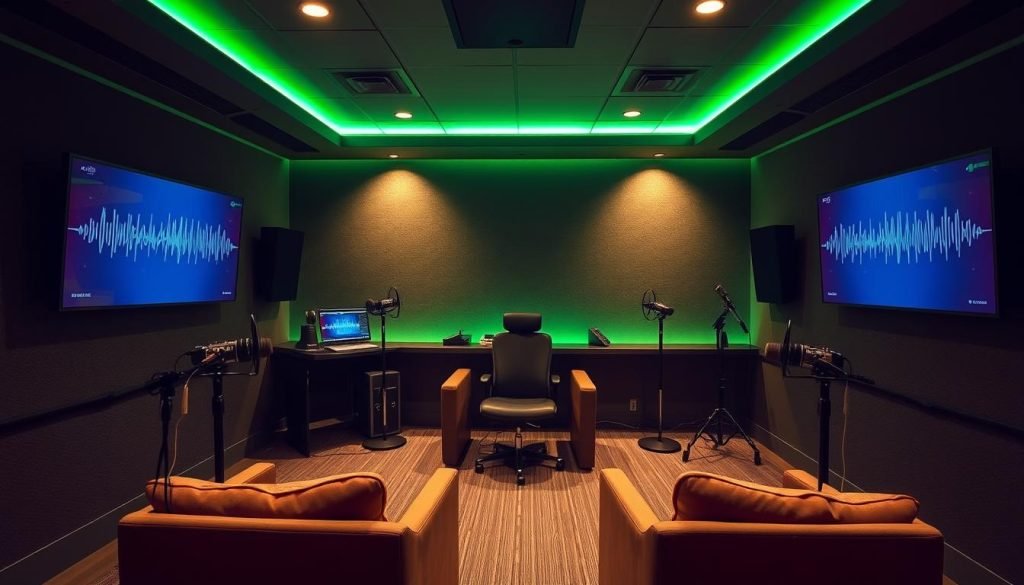
A relaxed setting is crucial for successful podcast interviews. Make sure your recording area is quiet and has the right gear. Here are some tips:
- Use quality USB microphones like Samson Q2U or Rode Podcaster
- Invest in a good mic stand, such as the Rode PSA-1
- Avoid glass-walled offices and tile-floored rooms
By focusing on these points, you’ll make a space where your guests feel comfortable. This leads to better conversations and more listeners.
Choosing the Right Guests

Finding the right guests is crucial for a great podcast. We’ll show you how to pick thought leaders who add value. This means doing thorough research to make sure they fit your podcast’s goals.
Identifying Thought Leaders
To find the best guests, start by looking for experts in your field. Here are ways to find potential guests:
- Leverage social media platforms
- Attend industry events for in-person networking
- Explore guest directories like PodcastGuests.com
- Optimize your website to attract guest applications
Evaluating Guest Experience
After finding potential guests, check their expertise and how well they interview. Look at these factors:
- Review their past work and media appearances
- Conduct a brief pre-interview to gauge their communication style
- Check if they have the necessary technical setup for a quality recording
Guests with different experiences can share unique insights. For example, Andrew Jose, featured in over 100 national outlets, brings four years of journalism experience to podcast interviews.
“Choosing the right guest is like finding the perfect puzzle piece for your show. It should fit seamlessly and enhance the overall picture.”
By carefully choosing guests, you’ll make content that your audience will love. This will also make your podcast better.
Building Rapport with Guests
Creating a strong connection with your guests is crucial for a great podcast interview. This connection makes conversations real and engaging for listeners. We’ll look at ways to build trust and improve your listening skills.
Techniques for Establishing Trust
Start by making your guests feel at ease. Welcome them warmly and chat casually before the interview. This helps them relax and share more honestly. Your goal is to make them feel important and heard.
- Be open and transparent about the interview process
- Show genuine interest in your guest’s expertise
- Maintain a non-judgmental attitude throughout the conversation
Using Active Listening Skills
Active listening is key to better podcast interviews. It means focusing fully on what your guest says, not just hearing it. This lets you ask deeper questions and keep the conversation lively.
“The most basic of all human needs is the need to understand and be understood. The best way to understand people is to listen to them.” – Ralph G. Nichols
To get better at active listening:
- Maintain eye contact (for video podcasts)
- Use non-verbal cues like nodding to show engagement
- Avoid interrupting or finishing your guest’s sentences
By using these methods, you’ll make your guests feel at ease. This not only makes for a better interview but also boosts the chance of them sharing your podcast. They might even promote it on 8 different platforms, as experts suggest.
Mastering Interview Techniques
Mastering podcast interviews is a mix of skill and strategy. We’ll look at key techniques to improve your interviewing skills. This will help you create engaging content for your listeners.
Open-Ended vs. Closed Questions
Open-ended questions are key to great podcast interviews. They lead to detailed answers and let guests share their thoughts freely. For instance, instead of asking, “Did you enjoy writing your book?” try “What was your experience like writing your book?” This way, you get richer content for your audience.
Encouraging Storytelling
Storytelling makes your podcast interviews more engaging and relatable. Ask guests to share personal stories by asking questions like, “Can you walk us through a pivotal moment in your career?” This not only keeps listeners interested but also builds a connection between the guest and the audience.
Active listening is key for podcast interview tips. Listen closely to your guest’s answers and ask thoughtful follow-up questions. This leads to more natural conversations and reveals unique insights your audience will love.
“The art of interviewing lies in the art of listening.”
By using these podcast interview tips and focusing on mastering podcast interviews, you’ll make more dynamic and memorable content. Keep practicing and improving your techniques to become a skilled podcast interviewer.
Staying Flexible During the Interview
Mastering podcast interview techniques is more than just asking questions. It’s about adapting to the conversation flow and picking up on subtle cues. Successful podcast interviews rely on the host’s ability to stay flexible and responsive.
Adapting to Unexpected Topics
While preparation is key, over-scripting can make interactions stiff. Skilled interviewers can pivot when guests introduce unexpected topics. This flexibility can reveal unique insights and make the content more engaging for listeners. Preparing a mix of questions helps guide the conversation while keeping it open to new directions.
Reading Non-Verbal Cues
Even in audio-only formats, non-verbal cues are crucial in successful podcast interviews. Pay attention to:
- Changes in voice tone
- Pauses or hesitations
- Enthusiasm in responses
These cues help you know when to delve deeper or move on. By tuning into these signals, you can make the conversation feel more natural and dynamic.
“The best interviews feel like a dance between host and guest, with both parties contributing to the rhythm and flow.”
Remember, being flexible in podcast interviews doesn’t mean losing control. It’s about finding the right balance between structure and spontaneity. With practice, you’ll learn to navigate conversations smoothly, creating memorable experiences for guests and listeners alike.
Utilizing Technology Effectively
To host a great podcast interview, you need the right tech setup. Let’s explore how to choose recording equipment and ensure clear audio quality. These are two key podcast interview best practices.
Choosing the Right Recording Equipment
Selecting the right gear is key for top-notch interviews. When it comes to microphones, your budget matters:
- Budget-friendly: RØDE PodMic ($89.95) or Blue Yeti USB Mic ($129.99)
- High-end: Shure SM7B ($399.00)
Don’t forget about accessories like pop filters to boost sound quality. For audio interfaces, you have options from the budget-friendly Focusrite Scarlett 2i2 ($129.00) to the high-end Apogee Symphony Desktop ($1333).
Ensuring Clear Audio Quality
Clear audio is crucial for a great podcast interview. Invest in quality headphones like the Audio Technica ATH-m30x ($79.00) for budget-conscious hosts. Or, go for the Shure SRH1540 ($499.00) for premium sound.
For recording software, Riverside offers local recording, multitrack capabilities, and live streaming. Free editing options include Audacity for Windows and Garageband for Mac users. Professional podcasters might prefer Adobe Audition or Logic Pro X.
Great tech is important, but it’s not everything. Focus on both tech and interviewing skills. This way, you’ll create engaging, high-quality podcast interviews your audience will love.
Editing and Post-Production
Mastering editing and post-production is key for a great podcast interview. Many new podcasters find these skills tough. But they’re vital for making engaging content. Let’s look at how to pick the right clips and keep listeners hooked.
Selecting Relevant Clips
When editing, focus on the unique parts of each interview. Cut out the repetitive stuff but keep the insightful bits. This keeps listeners interested and makes your podcast stand out. Editing should take no more than a couple of hours per episode.
Think about using a story arc or breaking the interview into scenes. This makes your podcast more engaging. Effective podcast interview strategies include starting with a hook and using sound bites to tease what’s coming.
Enhancing Listener Engagement
To boost engagement, try these:
- Use archival tape or media clips for historical topics
- Keep sound quality high with normalization, compression, and EQing
- Avoid editing out “um” and “ah” to keep it real
Try to make your final episode a bit shorter than the original. This keeps the conversation natural, which listeners love.
By using these editing tips, you’ll make a podcast interview that grabs your audience from the start.
Promoting Your Podcast Episodes
Getting your podcast out there is crucial. The right strategies can help you reach more people. Here are some tips to boost your show’s visibility.
Leveraging Social Media
Social media is a great way to promote your podcast. It’s where 42% of listeners find new shows. To get the most out of it:
- Create eye-catching visual content for each episode
- Use relevant hashtags to increase discoverability
- Share behind-the-scenes content to engage your audience
- Post teasers or short clips to generate interest
Collaborating with Guests for Promotion
Your guests can help promote your podcast. Work with them to reach more people:
- Provide guests with shareable content for their social media
- Tag guests in your promotional posts
- Encourage guests to share the episode with their followers
- Create cross-promotional opportunities with guest’s platforms
Word-of-mouth is key, with 53% of listeners finding new shows this way. By working with your guests, you can reach new audiences.
“Crafting hit podcasts relies on three pillars: killer content, audience interaction, and multi-platform distribution.”
By using these strategies, you’ll grow your podcast audience. You’ll also improve your interviews.
Continually Improving Your Skills
At PodcastHawk, we believe in the power of continuous improvement for mastering podcast interviews. Just like any skill, podcast interview techniques need practice and refinement. We’re here to guide you through this journey of growth and development.
Seeking Feedback from Your Audience
Your listeners are your best critics. Pay attention to their comments and reactions. Are they engaged throughout the episode? Which parts resonate the most?
Use this feedback to fine-tune your approach. Remember, confidence in your skills isn’t about perfection. It’s about the quality of your effort and willingness to adapt.
Attending Podcasting Workshops and Conferences
Industry events are goldmines for learning and networking. They offer insights into the latest trends and technologies in podcasting. For instance, AI is now playing a role in content creation and audience engagement.
By staying updated, you’ll be better equipped to deliver compelling content. This keeps your audience coming back for more.
Embrace the journey of continuous improvement. It’s not just about mastering podcast interviews; it’s about growing as a communicator. With each episode, you’re building confidence and honing your craft. Keep pushing forward, and watch your podcast flourish.
Leave a Reply