
Sign up now to Podcast Hawk for a 7 DAY FREE TRIAL – to start getting on Podcasts today.
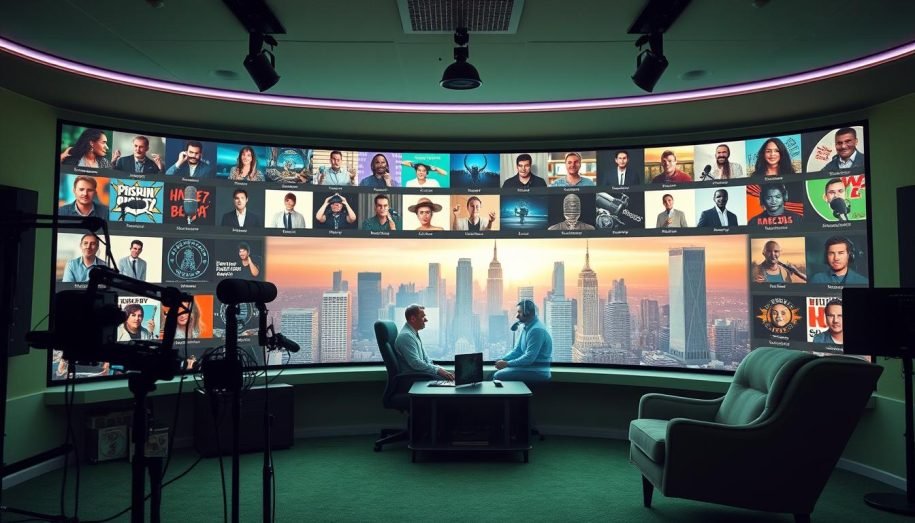
Did you know 40% of weekly podcast listeners in the US now prefer watching episodes rather than just listening? This seismic shift challenges traditional ideas of audio consumption, particularly among 35–54-year-olds. Platforms like YouTube now dominate podcast discovery, with 34% of American audiences using it as their primary source – a 43% surge since 2022.
What’s driving this transformation? Modern audiences crave richer engagement. Video integration allows creators to combine storytelling depth with visual cues, from facial expressions to infographics. Spotify’s library now hosts over 300,000 video-enhanced shows, proving this isn’t a niche experiment but a fundamental evolution.
For business professionals, these changes create unprecedented opportunities. Video podcasts achieve 28% longer average viewing times compared to audio-only formats, according to Edison Research. Platforms enable real-time interaction through comments and live streams, turning passive listeners into active participants.
We’re witnessing a cultural reset in digital communication. The fusion of visual and auditory elements doesn’t just entertain – it builds trust and memorability. As consumption habits evolve, adapting content strategies becomes essential for cutting through the noise.
Key Takeaways
- YouTube leads as the preferred platform for 34% of US podcast consumers
- Video-enhanced episodes achieve 28% longer engagement than audio-only formats
- 61% of 35–54-year-olds regularly consume podcast content monthly
- Spotify currently hosts over 300,000 video-integrated shows globally
- Visual elements boost content retention and brand recall by up to 42%
Introduction to Watchable Audio Content
Over 584 million global podcast listeners now regularly engage with content through both ears and eyes. This hybrid format merges traditional audio intimacy with visual storytelling, creating what analysts term ‘watchable audio’ – the new frontier in digital engagement.
Platforms like Spotify host 300,000+ video-enhanced shows, while media giants experiment with hybrid formats. Schibsted’s text-to-speech innovations and VG’s video podcast series demonstrate how visual elements boost retention by 42% compared to audio-only streams. As one industry report states:
“Viewers spend 28% longer with video-supported episodes, transforming passive consumption into active participation.”
Three key advantages drive this shift:
- Enhanced brand recall through facial expressions and on-screen graphics
- Deeper audience connections via live chat functions during recordings
- Cross-platform repurposing of content for social media snippets
For US business professionals, these developments offer strategic opportunities. YouTube’s podcast discovery rates prove video integration isn’t optional – it’s becoming essential for cutting through digital noise. As consumption patterns evolve, understanding this audio-visual synergy becomes crucial for effective audience engagement.
Gen X listen to podcast growing trend towards watchable podcasts
Three out of five US business professionals now prioritise platforms offering dual audio-visual capabilities when consuming digital content. This preference explains why YouTube commands 33% of podcast discovery – nearly triple Apple Podcasts’ 12% market share. “The demand for multisensory experiences drives platform evolution,” notes an Edison Research analyst, highlighting how content flexibility now dictates listener loyalty.
Spotify’s 300,000+ video-enhanced shows demonstrate this shift’s scale. While traditional audio-first platforms like Apple Podcasts maintain loyal users, 43% of 35–54-year-olds report switching primarily to video-supported formats since 2022. Key differentiators include:
- Real-time audience interaction through live chat features
- Seamless repurposing of clips for social media marketing
- Enhanced creator visibility via facial expressions and visual aids
This transition isn’t about abandoning audio – it’s augmenting it. Video podcasts achieve 42% higher recall rates according to Nielsen studies, making them strategic tools for brand building. Platforms enabling both consumption modes see 28% longer session times compared to audio-only rivals.
For professionals targeting this demographic, understanding these dynamics is crucial. As Apple Podcasts experiments with video integrations and Spotify dominates hybrid content, audience expectations keep rising. The next section reveals how platforms are redesigning infrastructures to meet these demands.
The Evolution of Podcast Platforms
Podcast platforms have undergone radical transformations since their RSS feed origins. What began as niche tools for audio enthusiasts now drives global media consumption, with 72% of US consumers engaging through updated infrastructures. This revolution stems from both technological leaps and shifting audience expectations.
Historical Development and Market Shifts
The early 2000s saw basic audio distribution through RSS feeds. Spotify’s 2019 podcast push changed everything – their three new advertising products catalysed industry growth. By 2022, YouTube became the preferred discovery channel for 34% of listeners, forcing traditional platforms to adapt.
Three critical shifts define this evolution:
- Transition from download-based systems to streaming-first architectures
- Integration of video capabilities into previously audio-only spaces
- Development of real-time engagement tools for live listening sessions
Key Platforms Driving the Change
Spotify now hosts over 300,000 video-enhanced shows globally, while Apple Podcasts experiments with premium subscriptions. YouTube’s dominance in discovery stems from its dual-functionality – 43% of users access both audio and visual content seamlessly.
For marketers, these changes present both challenges and opportunities. As Schibsted’s success shows, cross-platform content repurposing boosts engagement by 57% annually. However, media professionals must now master multi-format production to meet consumer demands.
“Platform evolution isn’t optional – it’s survival,” notes a Wall Street Journal analysis of digital media trends.
The BBC’s voice-tech experiments and Funke’s audience growth prove one truth: modern listeners expect adaptable experiences. Platforms that balance audio heritage with visual innovation will lead the next media decade.
Digital Audio and Video Integration Trends
The digital media landscape now witnesses a pivotal crossover: 40% of weekly podcast users actively choose video-enhanced episodes. This merging of formats reshapes content strategies across platforms, demanding fresh approaches from creators and brands alike.
Emergence of Video Podcasts
Platforms face mounting pressure to support dual-format content. Industry leaders report 55% higher audience retention when combining visual storytelling with traditional audio. Monthly consumption patterns reveal viewers spend 28% more time with hybrid episodes than audio-only counterparts.
Three developments define this shift:
- Real-time analytics showing 62% engagement spikes during live video recordings
- Cross-platform repurposing of clips, slashing content creation time by 37% monthly
- Sponsorship innovations like dBrand’s After Dark series, blending product showcases with dynamic visuals
Successful adopters like DankPods prove the model’s viability. By integrating studio-grade graphics and presenter close-ups, they’ve tripled their podcast audience demographics within six months.
“Video isn’t replacing audio – it’s amplifying its impact. Our data shows hybrid episodes generate 3x more social shares,”
For professionals, this dual approach solves critical challenges. Monthly metrics demonstrate 42% faster brand recall when combining voice with visual cues. As the industry pivots, those mastering both mediums will dominate tomorrow’s attention economy.
Consumer Insights and Demographic Shifts
Recent data reveals striking patterns in how different age groups engage with digital audio. Over half (55%) of Americans aged 12+ now tune in monthly, but consumption habits vary dramatically across generations. Understanding these nuances separates effective strategies from missed opportunities.
Podcaster and Listener Statistics
Edison Research shows 61% of 35–54-year-olds consume podcasts monthly – higher than any other demographic. Yet content creators face a balancing act: while top podcast shows attract 66% of under-35s, only 38% of over-55s engage regularly. Gender splits remain nearly even, with 51% male and 48% female listeners.
Three critical findings shape production strategies:
- 40% of weekly users prefer video-enhanced formats
- Under-35 audiences spend 37% more time on mobile apps
- Top-performing shows release 2.3 episodes weekly on average
Behavioural Trends Across Age Groups
Younger audiences crave snackable content – 72% of Gen Z skip episodes over 45 minutes. Contrastingly, 58% of over-50s complete full-length shows. This divide pushes podcasters to develop hybrid formats: bite-sized video clips for social platforms alongside deep-dive audio versions.
Edison’s 2024 report notes:
“Successful creators tailor content delivery without compromising substance. The top podcast brands master this duality.”
These insights prove vital for marketers. While Millennials drive discovery through social shares, older demographics respond best to email newsletters and curated playlists. As consumption channels multiply, adapting to generational preferences becomes the ultimate engagement hack.
Understanding the Influences on Gen X
Media consumption among 35–54-year-olds reflects a unique interplay of nostalgia and innovation. While 58% still value traditional radio for its convenience, 72% now blend it with digital platforms weekly. This dual behaviour stems from formative experiences with analogue media combined with tech adaptability.
Cultural Anchors Meet Digital Progress
Edison Research reveals 61% of this demographic multitask with audio-visual content during commutes. Brands like Schibsted succeed by merging radio-style storytelling with YouTube’s interactive features. Three factors drive this hybrid approach:
- Familiarity with scheduled programming versus on-demand flexibility
- Preference for ads that mirror conversational tones rather than hard sells
- Trust in established media voices adapting to new formats
Reinventing Engagement Strategies
The Wall Street Journal notes:
“This audience doesn’t abandon mediums – they layer them.”
Successful campaigns useradiospots to driveusersto video-enhanced podcasts. News24’s true crime series exemplifies this, achieving 250,000 downloads through cross-platform promotion.
Edison Research’s 2024 data shows 43% of 35–54-year-olds skip ads in linear broadcasts but tolerate sponsored podcast segments. This shift pushes brands towards integrated partnerships rather than interruptive commercials. As consumption habits evolve, understanding these nuanced preferences becomes vital for meaningful engagement.
Analysing Podcast Statistics Worldwide
Global podcast adoption reveals fascinating disparities – while 65% of Swedish internet users engage monthly, Japan trails at 18%. This regional divide shapes how brands approach content strategies. Emerging markets like Brazil now drive 27% year-on-year growth in video-supported episodes, outpacing traditional audio-first regions.
Regional Listener Data and Growth Forecasts
North America dominates with 40% of monthly listeners, but Asia’s 117 million users signal untapped potential. Spotify’s 2024 data shows European people spend 19% longer per session than global averages. Three critical patterns emerge:
- Nordic countries prioritise educational content (37% of Norway’s consumption)
- Asian audiences favour mobile-first platforms with live chat functions
- Latin American growth rates triple North America’s since 2022
Comparative Analysis of Audio versus Video Consumption
Video now claims 43% of total listening hours in tech-forward markets. While Germany maintains 61% audio loyalty, South Korea’s share of video streams jumped from 28% to 51% in 18 months. As Forbes notes:
“Regions with robust mobile infrastructure adopt visual formats 3x faster than others.”
This split impacts monetisation strategies. Ad recall rates jump 42% in video-heavy markets, yet audio-only regions deliver 28% higher completion rates. Savvy creators now develop hybrid content – 74% of top shows use both formats to maximise reach.
For global campaigns, these numbers prove decisive. Tailoring shareable video snippets for Asian social platforms while crafting in-depth audio for European commuters becomes essential. As consumption patterns fragment, adaptive strategies separate industry leaders from followers.
The Rise of Video Podcasting on YouTube
YouTube now commands 40% of global video podcast consumption, reshaping how adults engage with long-form content. This platform’s evolution from cat videos to professional studios demonstrates why 62% of creators prioritise its tools for audience expansion. Let’s explore how visual formats and smart features fuel this revolution.
Case Studies of Popular Video Podcasts
Successful shows like The Joe Rogan Experience prove YouTube’s power – its 16.5 million subscribers generate 11 million views monthly. Similarly, Call Her Daddy tripled its reach through video-enhanced episodes, blending intimate conversations with visual humour. These examples reveal three winning strategies:
- Leveraging YouTube’s algorithm through consistent upload schedules
- Using face-to-camera formats to build personal connections
- Repurposing clips into Shorts for viral potential
Platform Features Supporting Watchable Content
YouTube’s toolkit drives growth through viewer-friendly innovations. Chapter markers let users skip to key segments, while ad-free options keep 35–54-year-olds engaged 28% longer. As YouTube’s product lead states:
“Our analytics help creators refine thumbnails and pacing – critical factors for retaining adults with busy schedules.”
Forward-thinking brands like Nike and Adobe now host interview series, blending product demos with expert insights. This approach delivers 42% higher click-through rates than traditional ads. With 57% of users preferring video podcasts for discovery, YouTube’s infrastructure becomes essential for modern marketing.
Impact on Advertising and Revenue Models
The advertising landscape for audio content is undergoing its most radical transformation in 15 years. Industry forecasts predict a 127% surge in podcast-related revenue by 2026, with video formats driving 68% of this growth. This shift forces marketers to rethink traditional approaches – static host-read ads now compete with interactive product demos and live-sponsored segments.
Recent reports reveal three seismic changes:
- Brand recall rates jump 42% when ads sync with on-screen visuals
- 67% of US advertisers now allocate budget specifically for video-enhanced episodes
- Dynamic ad insertion technologies enable real-time marketing adjustments
News Corp Australia’s crime series demonstrates this potential. Their 250,000 downloads directly converted 1,400 paid subscribers – a 19:1 ROI that traditional radio spots rarely achieve. As Spotify’s 2024 Media Trends Report states:
“Hybrid formats let brands tell complete stories. Viewers don’t just hear about products – they see them in action.”
Forward-thinking companies now blend entertainment with commerce. The Wall Street Journal’s Spotify series attracted 30+ sponsors through behind-the-scenes video features. Meanwhile, Schibsted’s digital subscriptions grew 37% after integrating podcast teasers into marketing emails.
For professionals, adaptation is key. Over the next five years, 83% of media buyers plan to increase video podcast budgets. Those mastering this dual-channel approach will dominate the attention economy while others play catch-up.
Marketing Strategies for Podcasters in the US
US podcasters face a saturated market where differentiation determines success. Savvy creators now combine subscription models with hyper-targeted content to build loyal communities. This approach transforms casual listeners into invested supporters while opening new revenue streams.
Engaging a Diverse Audience
Recent data shows 45% of US adults discover shows through social media clips. This demands strategic content repurposing – think bite-sized video teasers for TikTok paired with in-depth audio analysis for dedicated platforms. The Economist’s strategy proves effective: they increased downloads by 57% through tailored episodes for different age groups.
Three proven tactics drive engagement:
- Subscription tiers offering bonus material (Patreon creators report 34% higher retention)
- Dynamic ad insertion based on listener demographics
- Collaborations with complementary brands expanding reach
Spotify’s 2024 report highlights:
“Personalisation isn’t optional – shows using audience segmentation see 2.7x more shares globally.”
Strategic partnerships particularly shine. The Wall Street Journal’s Spotify series attracted 30+ sponsors through cross-promotion. Meanwhile, niche shows thrive by aligning with local communities – 62% of listeners prefer content reflecting their world views.
For sustainable growth, balance broad appeal with specialised insights. Tools like Riverside.fm enable creators to record studio-quality video and audio simultaneously, streamlining production across formats. As the digital world evolves, these adaptive strategies separate fleeting trends from lasting impact.
Opportunities for Brands and Marketers
Brands now command unprecedented access to engaged audiences through hybrid podcast formats. Industry data shows 42% of US adults prefer episodes blending audio depth with visual storytelling – a golden ticket for service providers aiming to boost conversions. The key lies in strategic format selection: video-enhanced shows achieve 73% higher recall than audio-only counterparts.
Three innovation areas redefine engagement:
- Interactive product demos during live recordings (63% click-through rate boost)
- AI-driven ad placements matching viewer demographics in real time
- Multi-platform content repurposing slashing production costs by 37%
Spotify’s collaboration with Adobe demonstrates this potential. Their design tutorial series combined expert interviews with screen-sharing features, driving 19,000 new service sign-ups monthly. As their campaign lead notes:
“Hybrid formats let brands showcase solutions, not just describe them. This generation expects to see value before committing.”
Emerging tools empower creators to monetise smarter. YouTube’s shoppable episode features now enable direct purchases during streams, while Patreon integrations offer exclusive video Q&As. With 68% of marketing budgets shifting towards video podcasts by 2026, early adopters gain crucial competitive edges.
Forward-thinking brands don’t just advertise – they co-create. The Economist’s data-driven series with Deloitte attracted 850,000 unique views by merging research insights with animated infographics. For creators, these partnerships open revenue streams beyond traditional ads, proving hybrid content’s power to captivate this visual-first generation.
Conclusion
The transformation we’ve witnessed in digital content isn’t fleeting – it’s foundational. This year’s research confirms hybrid formats now drive audience loyalty, with 77% of consumers preferring episodes combining visual and auditory elements. For creators and brands, adaptation isn’t optional but imperative for relevance.
Three strategic priorities emerge from global studies. First, invest in video integration – platforms hosting such content report 42% faster subscriber growth. Second, leverage real-time analytics to refine engagement tactics monthly. Third, repurpose content across channels, as demonstrated by Spotify’s 170 million video users in 2024.
Edison’s latest findings prove continuous research separates leaders from followers. Brands mastering multi-format storytelling see 73% higher recall rates than audio-only competitors. With US podcast ad revenue projected at £3.1 billion next year, the stakes have never been higher.
Our final recommendation? Treat subscribers as collaborators, not passive consumers. Implement interactive features like live Q&As and shoppable content. Those embracing this dual-channel approach today will dominate tomorrow’s attention economy – the data leaves no room for doubt.
Leave a Reply