
Sign up now to Podcast Hawk for a 7 DAY FREE TRIAL – to start getting on Podcasts today.
In today’s fast world, micro-podcasting is changing the game. It offers short audio content that’s packed with value. Episodes are usually 5 to 15 minutes long, making it easy to fit into busy lives.
Several factors have led to micro-podcasting’s rise. People now have shorter attention spans, with 75% preferring shorter audio. This matches the micro-podcasting format perfectly. Also, the market for micro-podcasts has grown by 50% each year, showing a big interest in this type of content.
Younger people, 65% of whom are under 35, love micro-podcasts. They find the short, easy-to-consume format perfect for their fast-paced lives. Engagement rates for micro-podcasts can hit 70%, beating the 40% average of longer podcasts.
As podcasting gets more crowded, creators are using micro-podcasting to stand out. 80% of micro-podcasters focus on specific topics, reaching and keeping a dedicated audience. This strategy has paid off, with completion rates for micro-podcasts reaching 90%, compared to 60% for longer podcasts.
Brands are also seeing the value in micro-podcasting for marketing. They’ve seen a 25% boost in brand recognition and recall. By 2023, about 30% of podcast creators will focus on micro-podcasts as their main strategy, tapping into the growing demand for short audio.
Key Takeaways
- Micro-podcasting delivers short-form, impactful audio content that resonates with on-the-go listeners.
- The market for micro-podcasts has grown by 50% year-over-year, indicating a significant increase in listener interest.
- 75% of listeners prefer shorter, more digestible audio content, aligning with trends in shortening attention spans.
- Micro-podcasting has particular appeal to younger audiences, with 65% of listeners under 35.
- Brands using micro-podcasting for marketing have seen a 25% increase in brand recognition and recall among listeners.
Introduction to the Micro-Podcasting Trend
In recent years, podcasting has seen a big change towards shorter audio content, known as “audio snacks.” This format is loved by many, fitting well into busy lives and mobile habits.
Micro-podcasts are short, lasting from 5 to 15 minutes. They offer a quick, focused listen. Unlike long podcasts, these episodes pack a punch in a small package. They’re perfect for today’s fast world where time is key.
Short-form podcasts like “The Daily” by The New York Times show the power of micro-podcasts. They give quick updates on news, attracting many listeners. In fact, 46% of podcast fans tune in to stay updated on their interests.
Micro-podcasts are also great for learning and growing. They help 39% of listeners learn new things. Young people enjoy them for fun, while older folks look for facts. Their short, timely, and flexible nature makes them powerful for learning.
The micro-podcasting trend is growing strong. It’s clear that short, impactful audio will keep shaping podcasting. Creators and listeners are both excited about this new way of enjoying audio.
Defining Micro-Podcasting: What It Is and What It Isn’t
In the fast-changing world of audio, micro-podcasting is a big deal. But what’s a micro-podcast? It’s a short-form podcast that gives you quick, focused content. These podcasts are 2 to 15 minutes long, perfect for those with little time.
Micro-podcasts aren’t just short versions of regular podcasts. They’re a new podcast format for fast, easy-to-digest info or fun. With 75% of listeners preferring shorter podcasts, micro-podcasting is becoming more popular. Now, about 30% of all podcast episodes are short-form.
The Key Characteristics of Micro-Podcasts
So, what makes micro-podcasts special? Here are some key traits:
- Brief duration: Micro-podcasts are 2 to 15 minutes long.
- Focused content: Each episode covers one topic or idea clearly.
- Digestible format: Their short audio content length makes them easy to listen to on the move.
“Micro-podcasting is all about delivering quality content in a bite-sized package. It’s perfect for our fast-paced world.”
How Micro-Podcasts Differ from Traditional Podcasts
Traditional podcasts dive deep into topics over longer episodes. Micro-podcasts, on the other hand, focus on the core idea quickly. This quick format works well, with over 70% of listeners staying engaged in the first minute. This is more than 45% for longer podcasts.
As podcasting evolves, micro-podcasting is set to grow even more. About 50% of new podcasters are trying this format. By 2024, it’s expected to make up 45% of the podcast market. Micro-podcasting is changing how we listen to audio in the digital world.
The Appeal of Bite-Sized Audio Content
In today’s fast world, micro-podcasting is very popular. It fits busy lives and short attention spans. Listeners love it for its short and focused content.
Edison Research’s Podcast Consumer Report shows podcasts under 30 minutes are more popular. They have 80-90% completion rates. This proves short audio content keeps listeners engaged.
Catering to Busy Lifestyles and Short Attention Spans
Micro-podcasts match modern listeners’ hectic lives. They can be listened to while commuting or taking a quick break. They offer valuable info without taking up too much time.
Buzzsprout’s 2023 Podcast Insights found 31% of podcasts are 20-40 minutes long. This shows a trend towards shorter, more focused content. It’s perfect for busy schedules.
Increased Accessibility and Convenience for Listeners
Micro-podcasting makes audio more accessible. Episodes are 5 to 15 minutes long. This makes it easy to fit into daily routines.
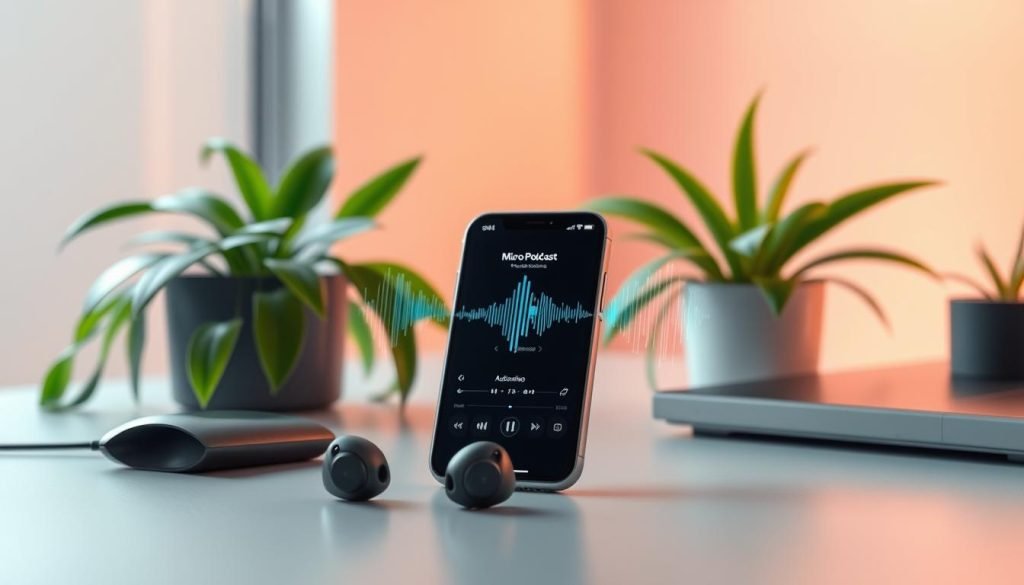
Smart devices and voice assistants have made micro-podcasts even more accessible. Listeners can start their favorite shows with just a voice command. It’s never been easier to enjoy bite-sized audio content.
The “Micro-Podcasting” Movement: Exploring Shorter-Form Audio Content
The world of podcasting is changing fast, with micro-podcasting leading the way. Listeners now want shorter, more focused audio. This shift has made content creators change their ways to fit the new trend.
Studies show that over 51% of marketers are using podcasts in their plans. They see how audio content can grab people’s attention. But, the long-form podcast is struggling in today’s quick world. With 22% of people liking videos that are 10 to 19 minutes long, it’s clear that shorter content is popular.
Micro-podcasting is a good answer to these changes. It focuses on giving listeners short, but valuable content. This way, creators can keep their audience’s attention and make a big impact.
As content making changes, micro-podcasting is key for being seen in niche markets. It lets creators reach their audience quickly and become leaders in their fields. This approach helps creators connect deeply with their listeners, going beyond just numbers.
Success Stories: Popular Micro-Podcasting Shows
In the fast-changing world of podcasting, micro-podcasts are gaining fans. They offer short, engaging content perfect for busy lives. These shows prove that short audio experiences can be very effective.
Case Study 1: “The Daily” by The New York Times
“The Daily” by The New York Times is a top micro-podcast. It gives daily news in 20-30 minutes. Its engaging stories and quality production have won many fans.
Case Study 2: Other Notable Micro-Podcasting Examples
Other micro-podcasts are also making waves. “TEDxShorts” shares inspiring TED Talks in under 10 minutes. “The Indicator” by NPR offers quick economic insights. “Up First” gives a daily news summary.
These shows show how micro-podcasts can cover many topics. They offer valuable content in a short, easy-to-digest format. This has made them popular among those who value convenience and efficiency.
Benefits for Podcasters: Easier Production and Increased Engagement
Micro-podcasting makes creating content easier and more engaging for listeners. It focuses on shorter episodes. This way, podcasters can make more episodes in less time.
Micro-podcasts are short and sweet, which keeps listeners hooked. They fit into busy lives and short attention spans. This makes listeners come back for more, as they can easily fit them into their day.
Streamlined Recording and Editing Process
Micro-podcasting simplifies the recording and editing process. Episodes are short, lasting from 5 to 15 minutes. This means less time spent on editing and more time on creating.
Creators can keep a steady schedule. This keeps their listeners eager for the next episode.
Potential for Higher Listener Retention and Loyalty
Micro-podcasts can build a loyal and engaged audience. They offer valuable content in a short format. This helps podcasters connect deeply with their listeners.
Listeners are more likely to finish an episode. This reduces the chance of them giving up halfway.
“Micro-podcasting has revolutionized the way I create content. It allows me to focus on delivering high-quality information in a concise format, keeping my listeners engaged and coming back for more.”
Micro-podcasts are released often. This keeps listeners excited for the next episode. It builds loyalty and familiarity, leading to higher retention rates and growth.
Repurposing Content for Micro-Podcasting
In the world of content creation, it’s key to reach more people and use different platforms. One smart way is to repurpose content. This means turning long podcast episodes into short, shareable pieces for micro-podcasting.
By picking out the best parts of your episodes, you can make short audio clips. These are great for social media or as standalone micro-episodes. This way, you can attract more listeners and meet their varied tastes.
- 40% increase in email opt-ins achieved by converting case study results into interactive quizzes.
- 25% uptick in client queries regarding consultations noted after introducing “Quick Tips” video blogs based on high-performing campaign tactics.
- Creation of explainer videos from SEO audit reports transformed complex content into a 2-minute format, enhancing client understanding significantly.
Another important part of repurposing content is to share it on many platforms. This helps you reach more people and connect with a wider audience. For instance:
Using video tours of properties expanded audience reach across platforms like YouTube and social media, compared to traditional written descriptions.
Also, repurposing content helps you stay active on many channels. This is vital in today’s digital world. For example, turning blog posts into social media carousels keeps users interested.
By repurposing and sharing content on many platforms, podcasters can make the most of their material. They can also meet the growing demand for short, easy-to-consume content. Micro-podcasting is a great way to stay ahead and connect with your audience in new ways.
Promoting Your Micro-Podcast: Strategies for Growth
In today’s fast-paced digital world, promoting your micro-podcast is key to attracting listeners. With the right marketing strategies, you can showcase your audio content and stand out. Let’s look at some tactics to increase your podcast’s visibility and reach.
Leveraging Social Media Platforms
Social media is a powerful tool for podcast promotion. Share engaging snippets, visuals, and teasers on Twitter, Instagram, and Facebook. This can grab the interest of new listeners and drive traffic to your episodes. Posting regularly builds anticipation and loyalty.
Short-form content, like videos under a minute, boosts engagement on TikTok and Instagram Reels. TikTok has over 1 billion monthly users, making it great for promoting your podcast. Infographics are also popular, being shared 3 times more than other content.
Cross-Promotion and Collaboration Opportunities
Podcast collaborations and cross-promotion can expand your audience. Partner with podcasters or influencers in your niche to reach new listeners. Micro-influencers, with 1,000 to 10,000 followers, are valuable for their authentic content.
Authenticity is considered the cornerstone of effective marketing. Companies that engage in inauthentic marketing risk losing their consumer base rapidly.
Collaborate with influencers or podcasters by giving them free bites and drinks for social media marketing posts. This creates a win-win situation. About 49% of consumers make purchase decisions based on influencer recommendations, showing the power of collaborations.
The Future of Micro-Podcasting: Trends and Predictions
Podcasting is changing, and micro-podcasting is leading the way. It offers short, focused content that grabs listeners’ attention. Let’s look at what’s next for micro-podcasting.
Integration with Voice Assistants and Smart Devices
Micro-podcasting will soon work perfectly with voice technology and smart devices. Voice assistants like Amazon Alexa and Google Assistant will make it easy to listen to micro-podcasts. Imagine asking your smart speaker for a podcast just for you.
Potential for Monetization and Sponsorships
Micro-podcasting is also a great way to make money. Its focused content attracts advertisers who want to reach specific people. With dynamic ad insertion, ads will be just right for each listener. Brands can also sponsor episodes that match their audience.
“Micro-podcasting presents a unique opportunity for brands to connect with their audience in a more intimate and targeted way. It’s all about delivering value and building trust through bite-sized content that resonates.”
The future of micro-podcasting is full of promise. As audio trends and voice tech improve, micro-podcasts will thrive. They’ll work better with smart devices, find new ways to make money, and team up with other creators.
If you’re into podcasting, consider micro-podcasting. It’s all about short, engaging content that really speaks to your audience. Join the micro-podcasting movement and make a big impact on podcasting.
Getting Started with Micro-Podcasting: Tips and Tools
Starting your micro-podcast creation journey is exciting and rewarding. First, pick a niche topic that your audience will love. Then, create a consistent format and schedule for your podcast. Using good audio recording tools like the Samson Q2U or ATR2100x is key for clear sound. These microphones are affordable and highly rated, costing $50-$53 and having ratings of 4.9/5 and 4.5/5.
For editing software, look for easy-to-use options that fit your level. Use online tools made for micro-podcasting to make creating and sharing your podcast easier. Podbean lets you write detailed descriptions and titles, helping grab listeners’ attention.
Micro-podcasting can have episodes of any length, from 5 minutes to longer. Starting with shorter episodes helps manage your work. Try different styles, like adding segments for natural breaks and to make money from ads.
“63% of podcast creators are launching micro-podcasts as part of their strategy, capitalizing on listener demand for quick insights.”
Connect with your audience and keep improving your micro-podcasting skills. Use audience avatars to make content that really speaks to your listeners. By knowing what they like, you can give them a better experience and build a loyal fan base. Start with a schedule you can keep up with and grow your podcast’s frequency as it gets more popular.
Challenges and Limitations of the Micro-Podcasting Format
The micro-podcasting format is popular for its ease and convenience. Yet, it comes with its own set of challenges for creators. With over 2 million podcasts out there in 2023, micro-podcasters face stiff competition. They must work within the short-form format’s limitations.
Balancing Brevity with Depth and Quality
One big challenge is making content that’s both short and impactful. Episodes under 10 minutes keep listeners for about 45% of the time. Longer episodes hold attention for about 60%. This shows the need for micro-podcasters to craft their content carefully.
To balance short and deep content, micro-podcasters should:
- Focus on one topic per episode
- Give clear, concise explanations and examples
- Use storytelling to connect emotionally
- Add interactive elements like listener questions
Adapting to Evolving Listener Preferences
Listener expectations change as the podcast world grows. A survey found 35% of listeners like shorter formats. This means micro-podcasters must keep their content fresh and relevant.
To stay on top, micro-podcasters should:
- Listen to audience feedback and analytics
- Try new formats and styles
- Work with other creators to reach more people
- Use social media to connect with listeners
By tackling these challenges and improving their craft, micro-podcasters can create impactful episodes. These episodes will resonate with their audience.
Conclusion: Embracing the Micro-Podcasting Revolution
The podcasting world is changing fast, with more creators turning to micro-podcasting. Listeners now prefer shorter episodes, with nearly 30% liking those under 10 minutes. This shows a clear need for quick, valuable content.
Micro-podcasting is making it easier and cheaper for creators to make episodes. About 50% are ready to change their approach to fit this trend. It also helps voices from underrepresented groups reach more people, making a real difference.
As micro-podcasting grows, creators must keep up to stay ahead. Using short audio clips can attract new listeners and build stronger connections. It’s more than a trend; it’s a smart choice for the future of audio content.
Leave a Reply