

Sign up now to Podcast Hawk for a 7 DAY FREE TRIAL – to start getting on Podcasts today.
In the 2024 presidential election, 81% of podcast listeners said they felt more informed about politics. This shows how podcasts and YouTube are changing how we talk about politics and campaign online.
Candidates like Donald Trump and Kamala Harris used podcasts and YouTube to talk directly to voters. Trump, in particular, used podcasts a lot, just like he did with Twitter in 2016.
Political podcasts saw a 20% jump in listeners before the 2024 election. 54% of voters said they made decisions based on what they heard in these podcasts. This shows people are turning to digital media for their political news more than ever.
YouTube also played a big role in the 2024 election, with 7 billion views on political content. This shows how important digital platforms are for reaching voters today.
After the 2024 election, it’s clear podcasts and YouTube are key for talking about politics and engaging voters. The “podcast election” name really captures the big change in how candidates talk to voters and how people learn about important issues.
Key Takeaways
- Podcasts and YouTube played a big role in the 2024 election
- Candidates used these platforms to talk directly to voters
- Political podcast listenership jumped by 20%, with many voters making decisions based on podcasts
- YouTube had billions of views for political content, showing its importance in campaigns
- The 2024 election showed how digital platforms are changing politics
The Rise of Alternative Media in Political Campaigns

In the 2024 presidential election, candidates are using podcasts and YouTube to talk directly to voters. This way, they avoid traditional media. With over 135 million monthly podcast listeners, these platforms are key in shaping the media landscape and boosting voter engagement.
Donald Trump and JD Vance have jumped on this trend, doing over 20 podcast interviews. Kamala Harris and Tim Walz have also done more than 10 podcast interviews in one month. This shows how important these platforms are in their candidate strategies.
Candidates Leveraging Podcasts and YouTube to Reach Voters
Younger people are spending more time with audio content than TV. Gen Z and Millennials listen to audio 94% and 66% more than TV. Many say podcasts are their main source of info on topics they care about. This shows podcasts’ power in voter engagement.
Kamala Harris could reach 14.5 million followers with one podcast appearance on Joe Rogan’s show. She’s targeting podcasts like “Call Her Daddy” and “All The Smoke” to reach certain groups and undecided voters.
Bypassing Traditional Media Channels
Podcasts and other formats are attracting candidates looking to reach many voters. The decline in trust in traditional news, among young adults and Republicans, has pushed them towards these platforms.
Only 31% of Americans reported a ‘great deal’ of trust in the accuracy of media reporting, marking a significant decline from 68% in 1971.
Candidates use podcast interviews to show a more personal side. They have relaxed conversations that connect with listeners. This has worked well, like Donald Trump’s appearance on The Joe Rogan Experience, which got nearly 40 million YouTube views.
Donald Trump’s Podcast Strategy

Before the 2024 presidential election, Donald Trump used podcasts to reach his supporters and new people. He chose podcasts with mostly men to grow his influence. This move was smart because podcasts are becoming more important in politics.
Trump was on big podcasts like The Joe Rogan Experience. This show has 14.5 million followers on Spotify and almost 19 million on YouTube. His chat with Rogan got over 46 million YouTube views. This shows how podcasts can really reach and engage people.
Targeting Male Audiences and Securing Endorsements
Trump was on at least 13 podcasts, focusing on shows with more men. This worked well, as over half of young men voted for him, The Associated Press found. Talking with big names like Joe Rogan and Logan Paul helped him win over his fans.
Massive Viewership Numbers on YouTube
Trump’s podcast clips got over 68.7 million YouTube views. This shows how YouTube is key for spreading his message. For example, CNN’s Primetime got about 830,000 viewers per episode in October 2024. It would take CNN a whole year to get as many views as Trump did from just 10 podcasts.
“The Joe Rogan Experience has generated over 100 million downloads, more than double the viewership of CNN during the first debate between Trump and Biden.”
The podcast world is booming, with a 27.8% growth rate until 2032. It’s expected to be worth nearly $250 billion globally. Trump’s use of podcasts to connect with voters has changed politics a lot.
Kamala Harris’s Targeted Podcast Approach
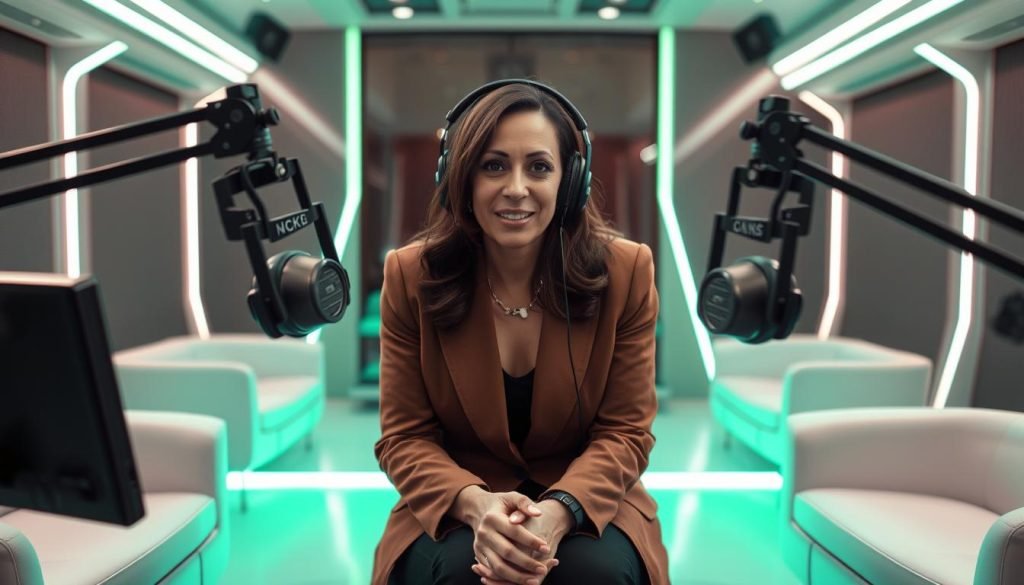
Vice President Kamala Harris used podcasts to reach important groups before the 2024 election. She appeared on shows like Call Her Daddy with Alex Cooper, Club Shay Shay with Shannon Sharpe, and All The Smoke with Matt Barnes and Stephen Jackson. Her goal was to connect with young women and Black men, key voters.
Her talk on Call Her Daddy with Alex Cooper lasted 45 minutes. It reached 76% women under 35 and 20% independent voters. This was a chance for Harris to appeal to more people than just Democrats.
Supplementing Mainstream Media Appearances
Harris was criticized for not doing enough interviews and turning down Joe Rogan’s podcast. But her podcast appearances were a good addition to her media efforts. They let her talk to specific groups in a more personal way.
A poll with 1,000 people showed 72% hadn’t heard Harris on podcasts. But among those who did, 51% were less likely to vote for her. 34% were more likely, and 13% didn’t change their minds.
“I believe that by engaging with audiences on platforms they already trust and enjoy, we can have more authentic and impactful conversations about the issues that matter most to them.”
Harris’s podcast strategy shows how important podcasts are in reaching voters. With 47% of Americans listening to podcasts monthly, using them well can help candidates a lot. It’s a way to connect with key groups and shape opinions.
The Unique Nature of Podcast Interviews
In the 2024 presidential election, podcast interviews became a key way for candidates to connect with voters. They differ from traditional news interviews because podcasts allow for more partisan conversations and personal storytelling.
Podcast hosts often chat with candidates in a friendly way. This creates a space for emotional connections and shows the real people behind the politicians. It’s different from the tough questions in mainstream media, letting candidates show their best side.
Partisan and Emotionally Driven Conversations
Podcast talks are often partisan, letting candidates talk directly to their supporters. For instance, Donald Trump went on The Joe Rogan Experience, reaching over 46 million YouTube views. By speaking to specific groups, candidates can rally their fans.
Candidates as Personal Storytellers
Podcasts let candidates share their personal stories and feelings. This personal storytelling makes them seem more real and relatable. It helps voters connect with them, making them more likely to vote for them.
The rise of podcasts in politics has changed how candidates talk to people. With over 100 million Americans tuning in weekly, podcasts’ impact on elections is big. As media keeps changing, podcast interviews will be more important in shaping politics and voter choices.
Lack of Scrutiny in Podcast Interviews
Podcasts have become a big deal for political candidates. But, there’s a big problem: not enough fact-checking. Podcasts are often friendly and casual, which means hosts don’t always question candidates’ claims. This lets false information spread without anyone stopping it.
Donald Trump’s chat on Joe Rogan’s podcast is a clear example. It has 14.5 million listeners per month. Trump said he didn’t lose the 2020 election, but Rogan just laughed. This lets false information reach a lot of young men who might believe it.
This issue isn’t just about one podcast. Many podcasts, aimed at young men, let candidates share their views without much fact-checking. This can make false information seem true to a lot of people.
“The friendly demeanor and lack of adversarialism in podcast interviews can lead to a lack of scrutiny, with hosts not calling out candidates when they make false claims or misleading statements.”
Podcasts are getting more popular, with almost half of Americans over 12 listening each month. It’s important for hosts and listeners to check facts and hold candidates accountable. If we don’t, it could harm our democracy and let false information spread.
The Value and Risks of Podcast Appearances
In the 2024 presidential election, candidates Donald Trump and Kamala Harris used podcasts to connect with voters in new ways. Podcasts’ relaxed, talk-like style helped candidates show their authenticity. This made them seem more personal and relatable to listeners.
Trump and Harris appeared on big shows like The Joe Rogan Experience and Call Her Daddy. These shows let them talk freely for about 45 minutes. This was different from usual news interviews, where they could share more about their lives and interests.
Getting to Know Candidates as Everyday People
Podcasts let candidates seem like regular folks. Trump talked to young men in a way he called “locker-room talk.” This might have appealed to many viewers. Harris, on the other hand, chose podcasts for women to connect with younger female voters.
Potential for Replacing Meaningful Media Scrutiny
“Traditional television is getting a little bit older and maybe less significant.” – Donald Trump
Podcasts can make candidates seem more real, but they might also cut down on media accountability. As podcasts grow in campaign plans, there’s worry about missing in-depth policy talks. This could make public discussions less thorough and less meaningful.
2024 Presidential Election as the “Podcast Election”
The 2024 U.S. presidential election will be known as the “Podcast Election.” This is because candidates used podcasts for voter outreach in a big way. Political advertising spending was at an all-time high, but podcasts were seen as a way to cut through the clutter and connect with people deeply.
Donald Trump’s visit to the Joe Rogan Experience (JRE) led to over 100 million downloads. JRE episodes get 11 million downloads, while CNN Primetime shows get only 400,000 viewers. Trump’s podcast election tour drew about 25 times more viewers than Kamala Harris’s podcast tour.
The podcast market is expected to grow fast, with a Compound Annual Growth Rate (CAGR) of 27.8% by 2032. It could hit almost $250 billion globally. Most podcasts don’t last long, but the best ones keep going strong.
“More than 100 million Americans listen to at least one podcast weekly, reflecting a 31% increase from the previous year.”
Trump appeared on 20 podcasts from July to Election Day. Harris was on eight. Trump’s podcast appearances reached 23.5 million weekly listeners aged 18 and older. Harris’s podcast appearances reached 6.4 million. This shows how podcasting is competing with traditional media for political advertising and attention.
As podcasting grows, with AI-driven content reaching 45 million Americans monthly, the podcast election marks the start of a new era in politics. It’s a time when voter outreach will be more personal and engaging than ever before.
The Growing Importance of Emerging Channels
The 2024 presidential election highlighted the growing role of podcasts and Twitch streams in politics. Traditional media is losing appeal to younger people. So, campaigns are now using these platforms to connect with voters.
100 million Americans listen to podcasts every week. Gen Z and millennials are also big fans of audio content. This shows the huge impact these channels can have.
Both major parties see the value in these new spaces. They offer a chance to reach people who are open to messages, not yet bombarded with ads. Donald Trump’s podcasts reached 23.5 million Americans, while Kamala Harris’ efforts got 6.4 million listeners.
Trust is key, too. 42% of people trust podcasts more than other media, a 2024 report found.
Advertising and Influencing in Podcasts and Twitch Streams
Podcasts and Twitch streams are changing how campaigns talk to voters. Shows like “Call Her Daddy” and “This Past Weekend w/ Theo Von” show their power. They can engage people and start important conversations.
For example, Trump’s podcast episode hit #1 on Spotify. It has 13 million views on YouTube.
Potential Impact on the Advertising Landscape
The rise of these channels could change advertising a lot. Gen Z listens to podcasts to learn about social issues. 84% of podcast fans use social media to share their favorite shows.
The 2024 election showed how much influence these platforms have. Their role in shaping opinions and discussions will only grow.
The Shifting Media Consumption Landscape
The 2024 Presidential election saw a big change in how Americans get their news. Digital platforms became the main way to engage with politics. This change affects how campaigns talk to voters.
Studies show over 75% of voters talk about elections with friends and family. Almost one-third follow digital influencers. Also, 37% of voters share political content online, showing social media’s big role in shaping opinions.
Only 25% of voters want direct messages from candidates. This shows people prefer other media sources.
Embracing Digital Platforms for Voter Outreach
Campaigns need to change to reach voters. Using TV and streaming ads together reaches 95% of voters. Younger voters use streaming services a lot, and seniors use them too.
Voters watch videos about candidates online and share them. This shows the power of engaging digital content. Campaigns should focus on podcasts and newsletters to connect with voters.
The Rise of Social Media in Political News Consumption
Social media is now key for election news, with 20% of people using it as their main source. Younger adults rely on it even more, with 46% of U.S. adults under 30 using it for news. X, TikTok, Facebook, and Instagram are important for campaigns to reach voters.
“The 2024 election showed campaigns need to use digital platforms and new media to connect with voters.”
As media changes, communications experts must keep up. By focusing on podcasts, newsletters, and social media, campaigns can engage with voters in the digital world. The 2024 election highlights the role of new media in politics.
Conclusion
The 2024 presidential election changed how we see media and politics. Candidates like Kamala Harris and Donald Trump used podcasts and YouTube to talk directly to voters. Harris aimed at young women and Black men, getting 83% support from Black voters and 61% from Latinos.
Trump was on podcasts that reached 23.5 million voters, while Harris’s podcasts reached 6.4 million. Podcasts let candidates share personal stories and talk about politics. But, there’s worry that these interviews don’t get enough scrutiny.
As podcasts and Twitch streams become more important, ads might change too. Emotional content spreads faster, with the right often using more emotional messages than the left. This could affect how we see and interact with political ads.
In future elections, we’ll see more use of new media. Candidates need to use these platforms wisely while keeping things transparent and accountable. The 2024 election showed us the importance of adapting to new media and keeping our democracy strong.
Leave a Reply